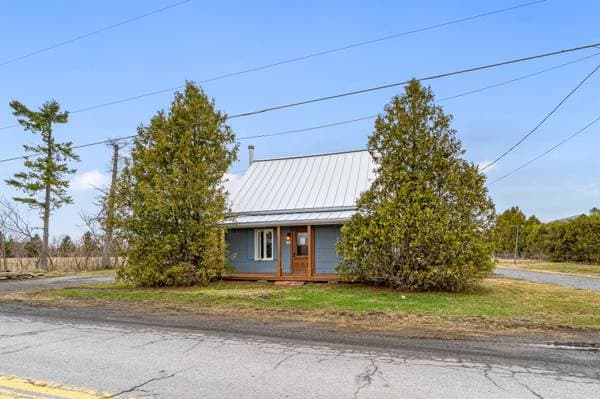
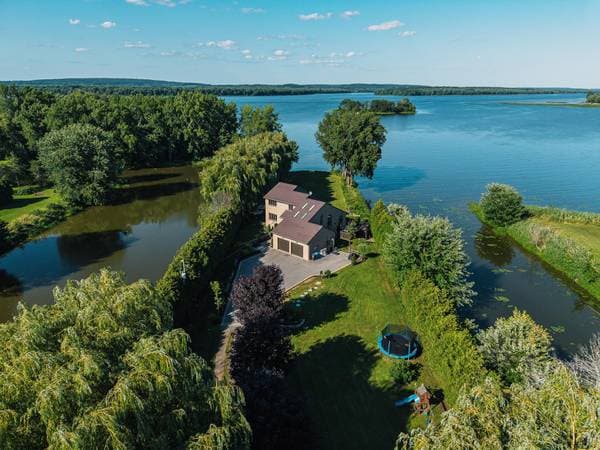
 New
New$1,395,000
39 Rue Anna
Rigaud
5 beds2 baths
Off-Island
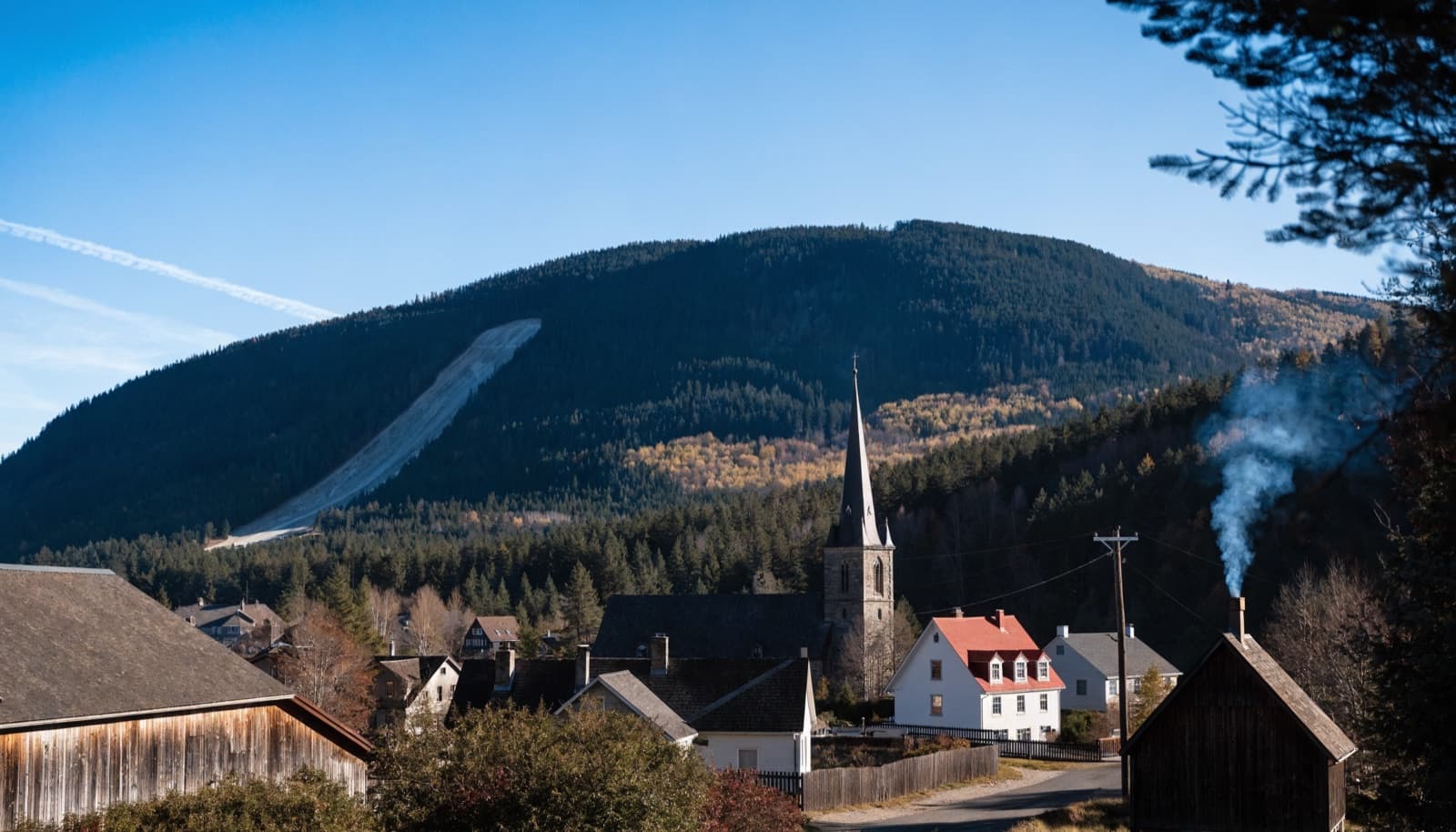
A historic mountain town at the region's western edge, where a family ski hill, a legendary sugar shack, and a hilltop sanctuary are everyday scenery.
A historic mountain town at the region's western edge, where a family ski hill, a legendary sugar shack, and a hilltop sanctuary are everyday scenery.
Highway 40 reaches its western terminus at Rigaud, running straight east toward Vaudreuil-Dorion and the Île-aux-Tourtes bridge, and west into Ontario; train riders drive to exo Vaudreuil–Hudson stations to the east.
The Centre de services scolaire des Trois-Lacs serves francophone students and the Lester B. Pearson School Board serves eligible anglophone families, with Collège Bourget adding a long-established private option in town.
Mont Rigaud's ski hill and four-season trail network, the Sucrerie de la Montagne for maple season, and the Ottawa River tracing the town's northern edge.
Rigaud is the town with a mountain in its backyard — and in a region as famously flat as this one, that changes everything. Sitting at the western edge of Vaudreuil-Soulanges where Quebec leans toward the Ontario border, Rigaud pairs a historic town centre along the Rivière Rigaud with the forested bulk of Mont Rigaud rising behind it, and the Ottawa River tracing the northern boundary. The result feels less like a suburb than like a small Laurentian town that wandered south and decided to stay.
The mountain is the headline. Mont Rigaud carries a beloved family ski hill — the kind of place where kids learn to snowplow without a two-hour drive — plus an extensive four-season trail network for hiking, trail running, and mountain biking. On its flank sits the Sucrerie de la Montagne, the legendary sugar shack that draws visitors from across the province for maple season done properly. And overlooking it all, the Sanctuaire Notre-Dame-de-Lourdes has made Rigaud a pilgrimage destination for generations. Few towns this size have three genuine landmarks; Rigaud treats them as everyday scenery.
History runs deep here too. The town grew as a religious and educational centre — Collège Bourget has anchored it for generations and remains a major private-school draw — and the old town core retains the stone buildings, church presence, and main-street rhythm of a community with real roots. Around that core, the housing story is delightfully varied: century homes and village properties in the historic centre, established bungalows and family homes in the residential sectors, newer developments arriving as the region's growth pushes west, and — the Rigaud specialty — mountainside and country properties where the forest is the fence. Buyers who dream of a wooded retreat with a workable commute keep ending up here, slightly amazed at what their budget accomplished.
On commuting: Highway 40 reaches its western terminus at Rigaud, giving drivers a straight highway shot east along the region's northern edge toward Vaudreuil-Dorion and the Île-aux-Tourtes bridge — or west into Ontario, which matters for households with Ottawa-side ties. There's no longer passenger rail in town, so train commuters drive to the exo Vaudreuil–Hudson line's stations to the east. Rigaud is a deliberate distance from the metropolitan core; residents consider that the point, not the problem.
Families follow the regional school pattern — the Centre de services scolaire des Trois-Lacs on the francophone side, the Lester B. Pearson School Board for eligible anglophone families — with Collège Bourget adding a private option that draws students from well beyond town. Community life is small-town Québécois with a bilingual borderland flavour: festivals, maple season rituals, ski-hill friendships, and merchants who know their regulars.
The value proposition is the region's most dramatic: mountain, rivers, history, and land, at price points that consistently surprise buyers arriving from anywhere closer to Montreal. The trade-offs are equally clear — you're at the region's far edge, services are small-town scale, and a car is non-negotiable.
Who is Rigaud for? Outdoor families who want skiing, trails, and maple taffy as local errands. Buyers chasing acreage and privacy without abandoning highway access. Ottawa-Montreal straddlers. And anyone who has looked at a flat suburban horizon and thought: I'd rather have a mountain. Rigaud has one, and it shares.
Local business data powered by Google.