 New
New$449,000
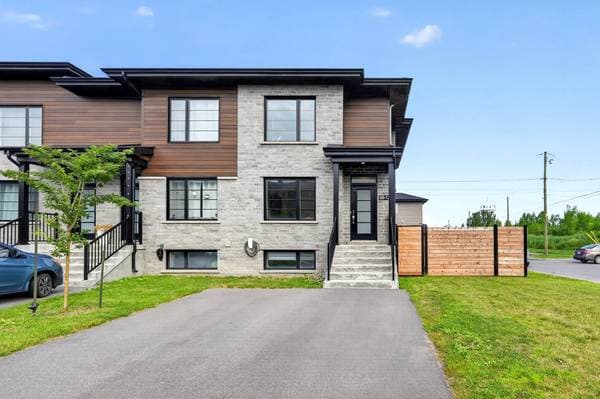
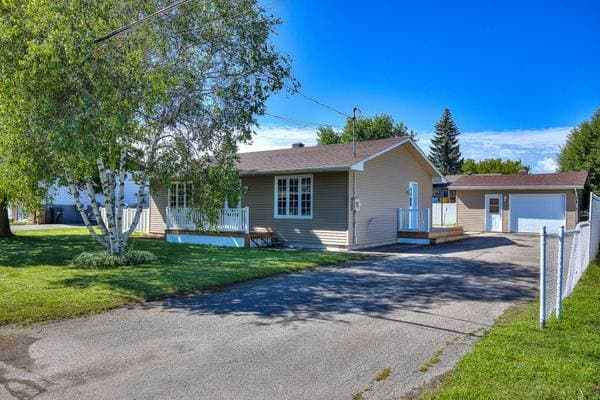
28 5e Avenue
Beauharnois
2 beds2 baths988 ft²
Off-Island
A small waterfront city on Lac Saint-Louis with a monumental landmark — the Beauharnois dam and canal — three distinct sectors (the historic core, Maple Grove and Melocheville), and some of the region's best first-time-buyer value.
A small waterfront city on Lac Saint-Louis with a monumental landmark — the Beauharnois dam and canal — three distinct sectors (the historic core, Maple Grove and Melocheville), and some of the region's best first-time-buyer value.
Highway 30 connects across the South Shore and toward the Montréal bridges, while Route 132 follows the shoreline toward Châteauguay and the Mercier Bridge; Valleyfield's services are just down the highway.
French public schools through the Centre de services scolaire de la Vallée-des-Tisserands and English options through the New Frontiers School Board, with the Collège de Valleyfield CEGEP nearby.
The Parc régional de Beauharnois-Salaberry trail network along the canal, the Lac Saint-Louis shoreline with boat launches and fishing, and the wooded point of Pointe-du-Buisson in Melocheville.
Beauharnois is the city thousands of drivers pass on Highway 30 every day without ever turning off — and the people who did turn off would prefer to keep it that way. This small waterfront city on the south shore of Lac Saint-Louis has spent years as one of the region's best-kept value plays: real houses, real water, real trails, at prices that make first-time buyers double-check the listing.
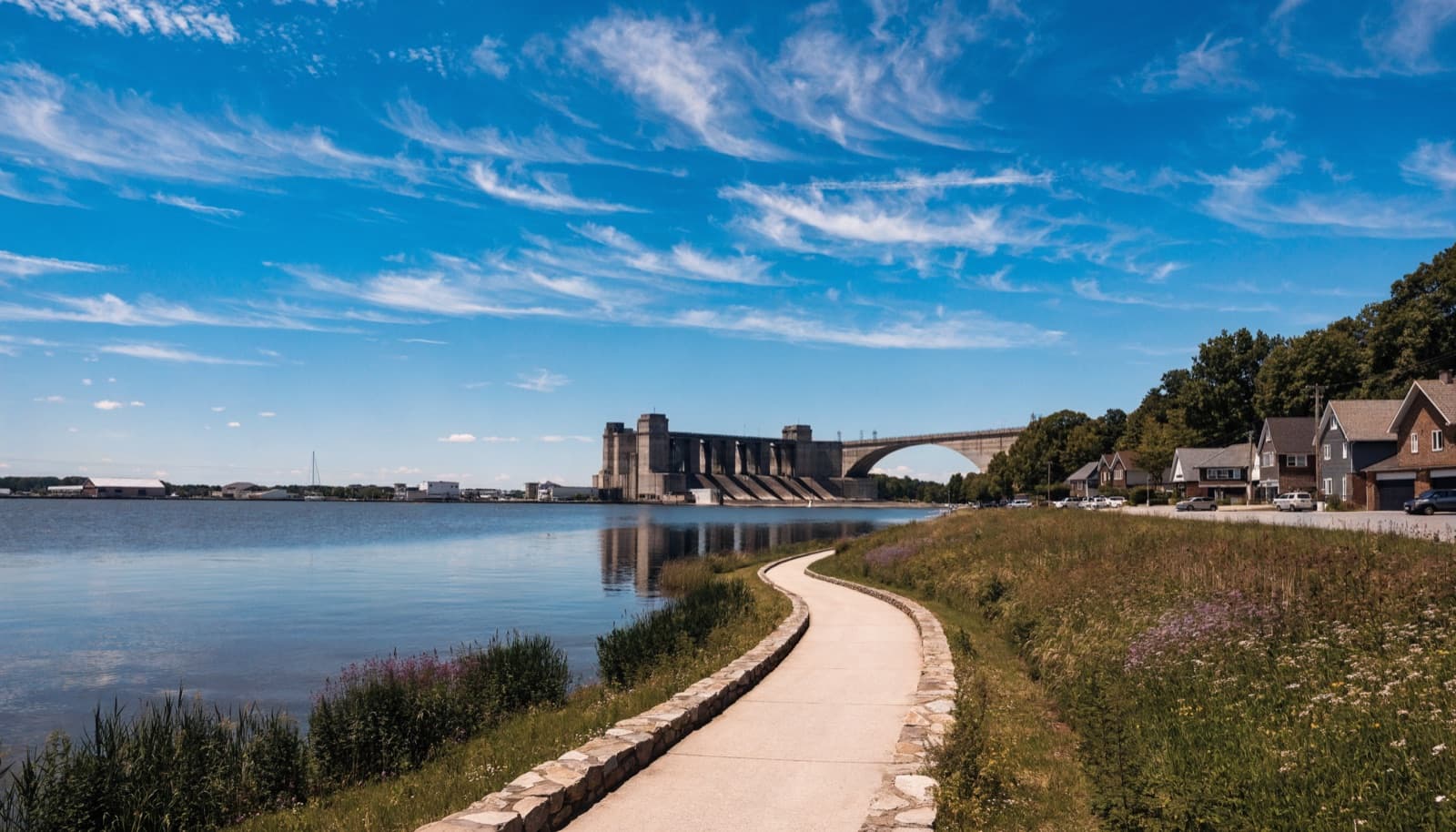
Start with the landmark you can see from across the lake. The Beauharnois hydroelectric generating station is one of the giants of Hydro-Québec's network, a monumental powerhouse stretched across the water where the Beauharnois Canal meets Lac Saint-Louis. Seaway ships glide along the canal, the dam hums away, and the whole ensemble gives Beauharnois something few bedroom communities have: a genuine sense of place. You do not confuse Beauharnois with the suburb next door.
The city is really three communities in one. The historic Beauharnois core holds the old streets, the churches and the riverside civic life of a town that has been here for generations. Maple Grove, to the east, is the leafy residential sector along the lake, long favoured by families who want quiet streets and water at the end of them. And Melocheville, to the west by the canal and the dam, keeps a village personality of its own — it is also home to Pointe-du-Buisson, the archaeological museum on a wooded point where the story of this shoreline goes back thousands of years before anyone poured concrete.
Outdoors is where Beauharnois quietly outperforms. The Parc régional de Beauharnois-Salaberry runs its trail network along the canal — long, flat, water-lined paths that cyclists, runners and cross-country skiers treat as their personal escape corridor. Add the Lac Saint-Louis shoreline, boat launches and fishing spots, and you have a city where the water is not a view; it is a habit.
The growth story is impossible to miss. Highway 30 turned this stretch of the south shore into one of the region's development corridors, and Beauharnois has been answering with new residential neighbourhoods — modern single-family homes, townhouses and semi-detached homes rising alongside the postwar bungalows and older village homes. Employers have followed the highway too, with industrial and logistics investment in the corridor bringing jobs closer to home. For buyers, that mix matters: you are not just buying cheap land far from everything; you are buying into a municipality that is actively filling in.
Commuting is refreshingly straightforward by off-island standards. Highway 30 puts the rest of the South Shore within easy reach and connects toward the bridges to Montréal, while Route 132 hugs the shoreline toward Châteauguay and the Mercier Bridge. Salaberry-de-Valleyfield's hospital, CEGEP and big-box shopping sit just down the highway, and Châteauguay's services pull from the other direction. French public schools are served by the Centre de services scolaire de la Vallée-des-Tisserands, with English options through the New Frontiers School Board.
So who is Beauharnois for? First-time buyers, above all — this is one of the last places in the greater Montréal orbit where a young household can land a detached home with a yard without financial gymnastics. Young families who want bike paths and boat launches instead of traffic and towers. Trades and logistics workers employed along the Highway 30 corridor. And buyers with an eye for trajectory, who would rather get into a city while it is filling in than after it is filled up.
Local business data powered by Google.